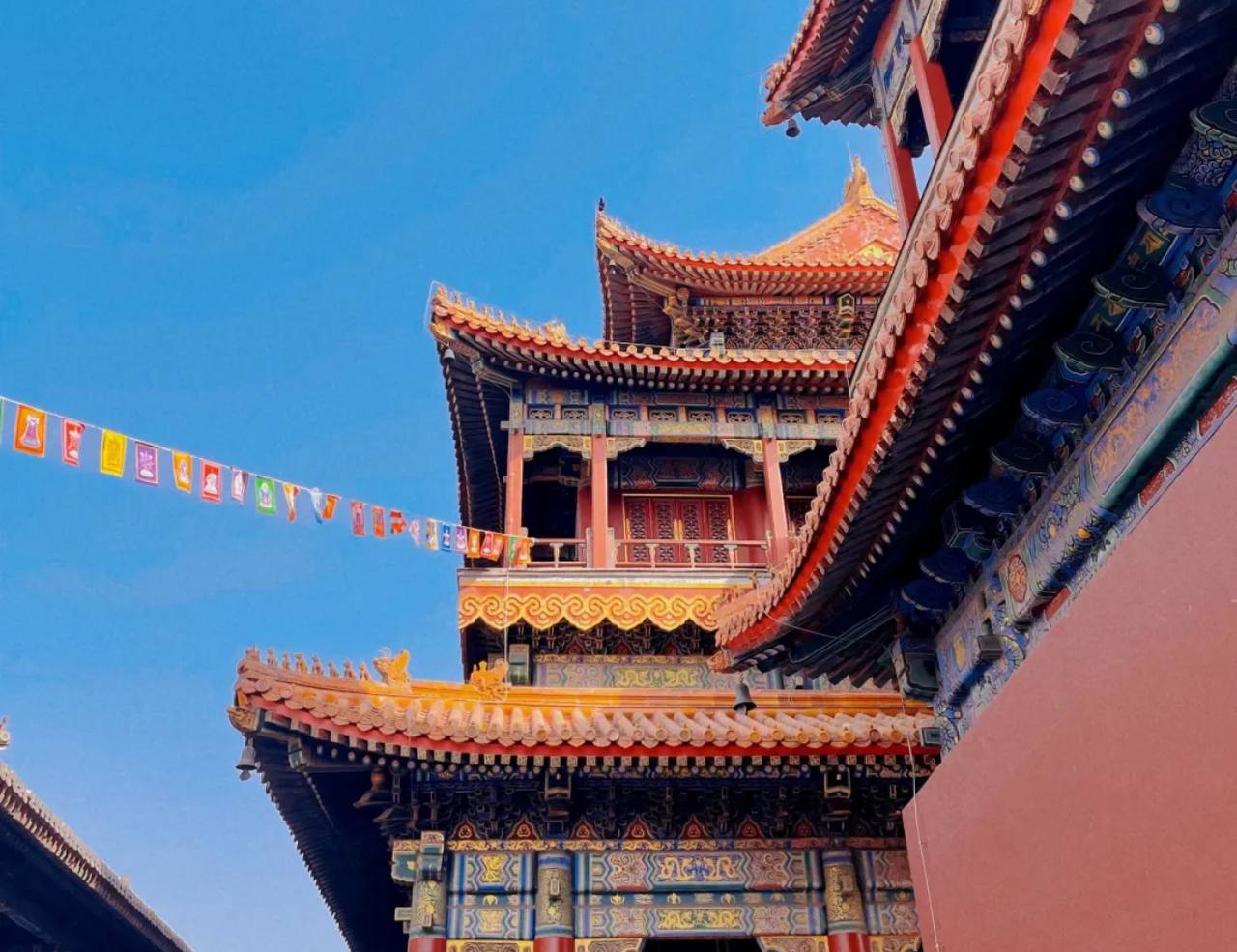
The Lama Temple (Yonghe Temple or Yonghegong, 雍和宫) is one of Beijing’s most significant religious sites and a stunning example of Chinese Buddhist architecture.
Originally an imperial residence, it later became a temple and monastery of Tibetan Buddhism, and today it remains an active place of worship. The temple is notable for its blend of Han Chinese and Tibetan architectural styles, as well as its deep connection to the Qing Dynasty.
Visit Beijing with travelurchina:
- Hutongs in Beijing: the hidden treasure
- How to visit the Great Wall of China
- Forbidden city: how to visit imperial palace in Beijing
- History of Lama Temple
- Imperial Origins
- Role in Tibetan Buddhism
- Survival through turbulent times
- Modern Era
- What to see in Lama Temple
- Hall of Heavenly Kings (Tianwang Dian)
- Main Hall (Yonghe Dian)
- Hall of Harmony and Peace (Yongyou Dian)
- Pavilion of Ten Thousand Happinesses (Wanfu Ge)
- Temple Architecture
- How to visit the Lama Temple
- Location and getting there
- Admission and opening hours
- Best Time to Visit
- What to Expect During Your Visit
- Nearby attractions
History of Lama Temple
Imperial Origins
The Lama Temple was initially built in 1694 during the reign of the Kangxi Emperor of the Qing Dynasty as the residence of his son, Prince Yin Zhen. In 1722, Yin Zhen ascended the throne as the Yongzheng Emperor, and the residence was converted into a royal palace.
After the death of the Yongzheng Emperor in 1735, his son, the Qianlong Emperor, granted the palace the status of a lamasery (a Tibetan Buddhist monastery) in memory of his father. It officially became a place of worship for Tibetan Buddhism, and many of the monks were from Tibet and Mongolia.
The temple was renamed Yonghe Temple (meaning “Palace of Harmony and Peace”) and was opened to the public as a religious site in 1744.

Role in Tibetan Buddhism
The temple became one of the most important centers of Tibetan Buddhism outside Tibet. It served as a key location for interactions between the Qing emperors and Tibetan lamas.
The Qing emperors, especially Qianlong, promoted Tibetan Buddhism as part of their strategy to maintain unity and control over Tibet, Mongolia, and the other regions under their rule.
In the 18th century, the 6th Dalai Lama stayed at the Lama Temple during his visit to Beijing, highlighting its importance in Tibetan Buddhist affairs.
Survival through turbulent times
Despite political and social upheavals throughout Chinese history, including the fall of the Qing Dynasty, the cultural revolution, and other political shifts, Lama Temple survived intact, unlike many other religious sites.
It was one of the few temples to remain operational during the Cultural Revolution (1966–1976), thanks to the intervention of Premier Zhou Enlai, who ensured its protection.

Modern Era
The Lama Temple remains a functioning monastery and a place of pilgrimage for Tibetan Buddhists. It is also one of Beijing’s most visited tourist attractions, attracting both worshippers and visitors interested in its rich history and striking architecture.
What to see in Lama Temple
Hall of Heavenly Kings (Tianwang Dian)
Upon entering the temple, visitors first pass through this hall, which contains the statues of the Four Heavenly Kings and a statue of Maitreya, the future Buddha. The ornate detailing in this hall represents classic Buddhist iconography.
Main Hall (Yonghe Dian)
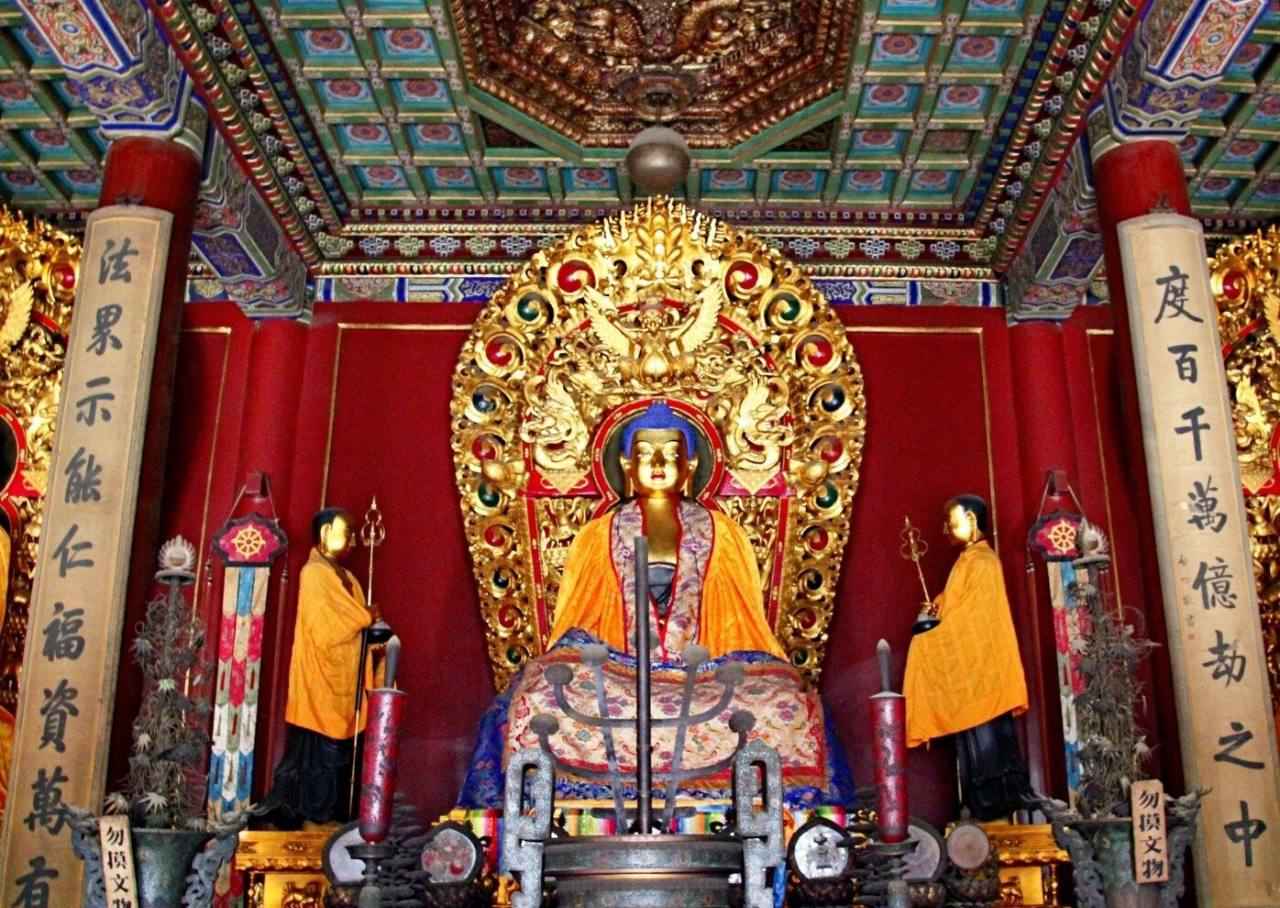
The main hall of the temple is home to a large statue of the Shakyamuni Buddha, surrounded by other deities. The hall’s grand, elevated structure, with layers of glazed tiles and intricate carvings, reflects traditional Qing architectural styles.
Hall of Harmony and Peace (Yongyou Dian)
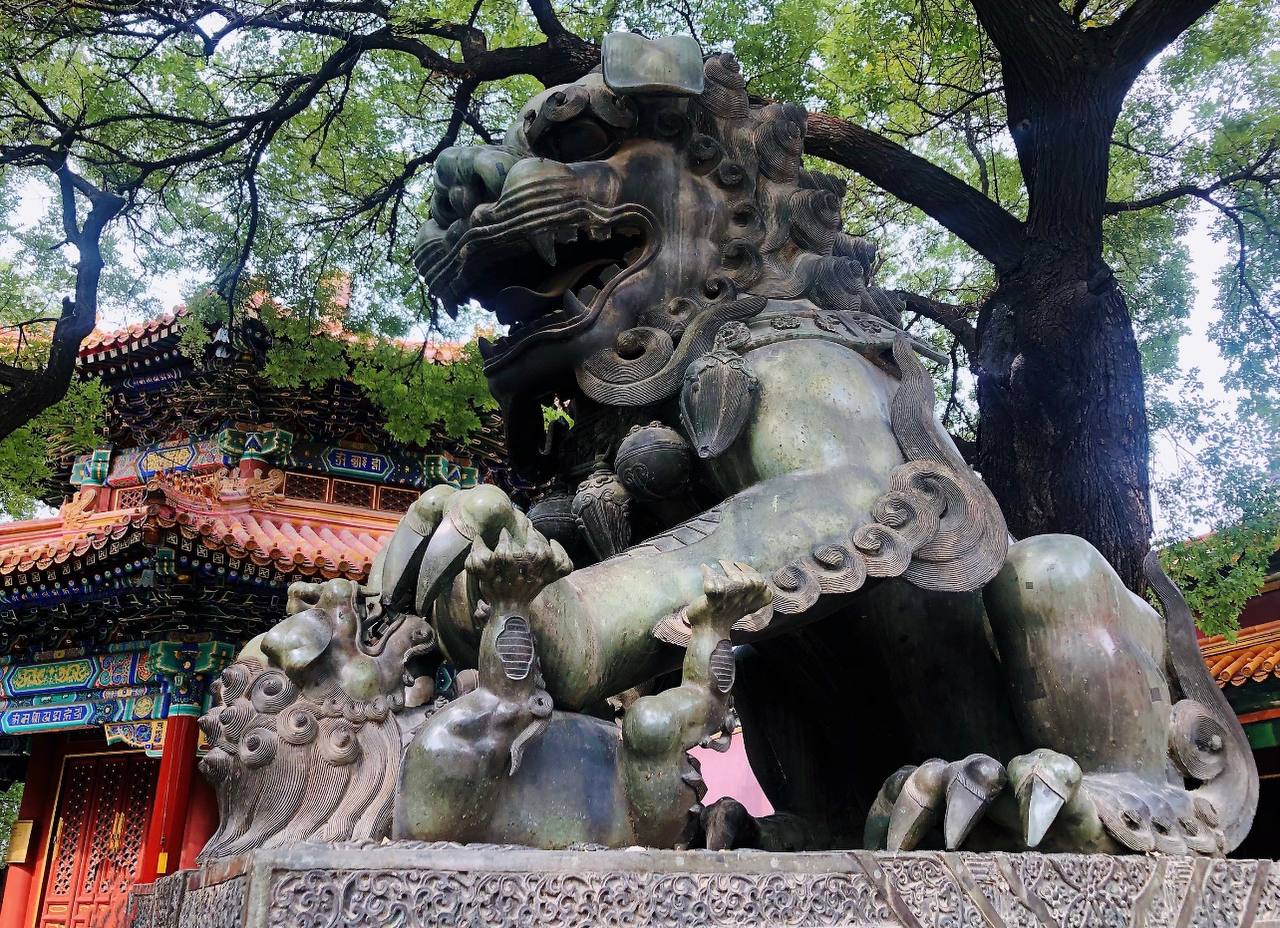
This hall houses three large bronze statues of the Past, Present, and Future Buddhas. The statues are beautifully crafted and richly adorned, symbolizing different phases of the Buddha’s life.
Pavilion of Ten Thousand Happinesses (Wanfu Ge)
The pavilion contains one of the most remarkable features of the Lama Temple: a massive, 26-meter-high statue of the Maitreya Buddha carved from a single piece of sandalwood.
This statue was a gift from the 7th Dalai Lama to Emperor Qianlong and is listed in the Guinness Book of World Records for its size.
Temple Architecture
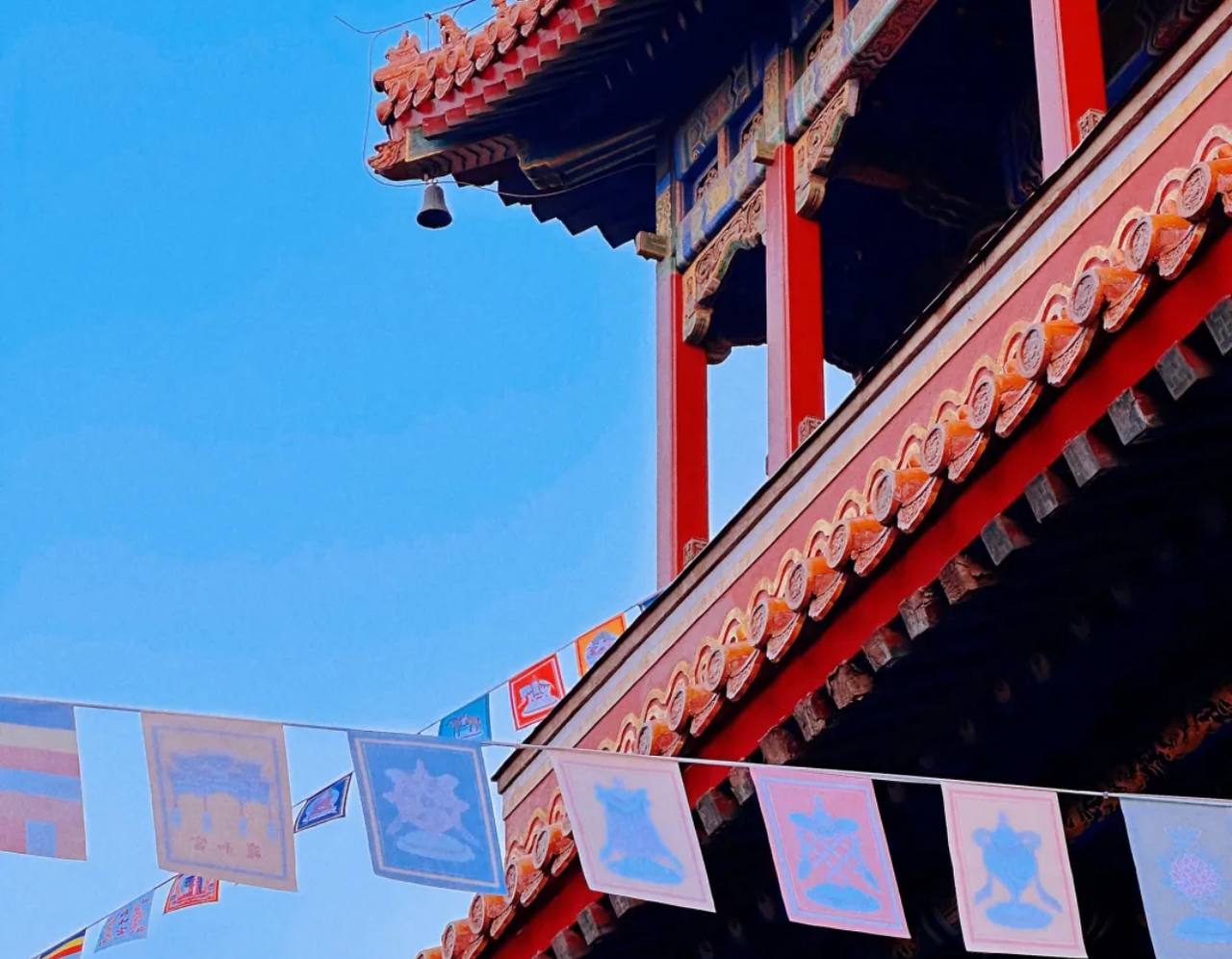
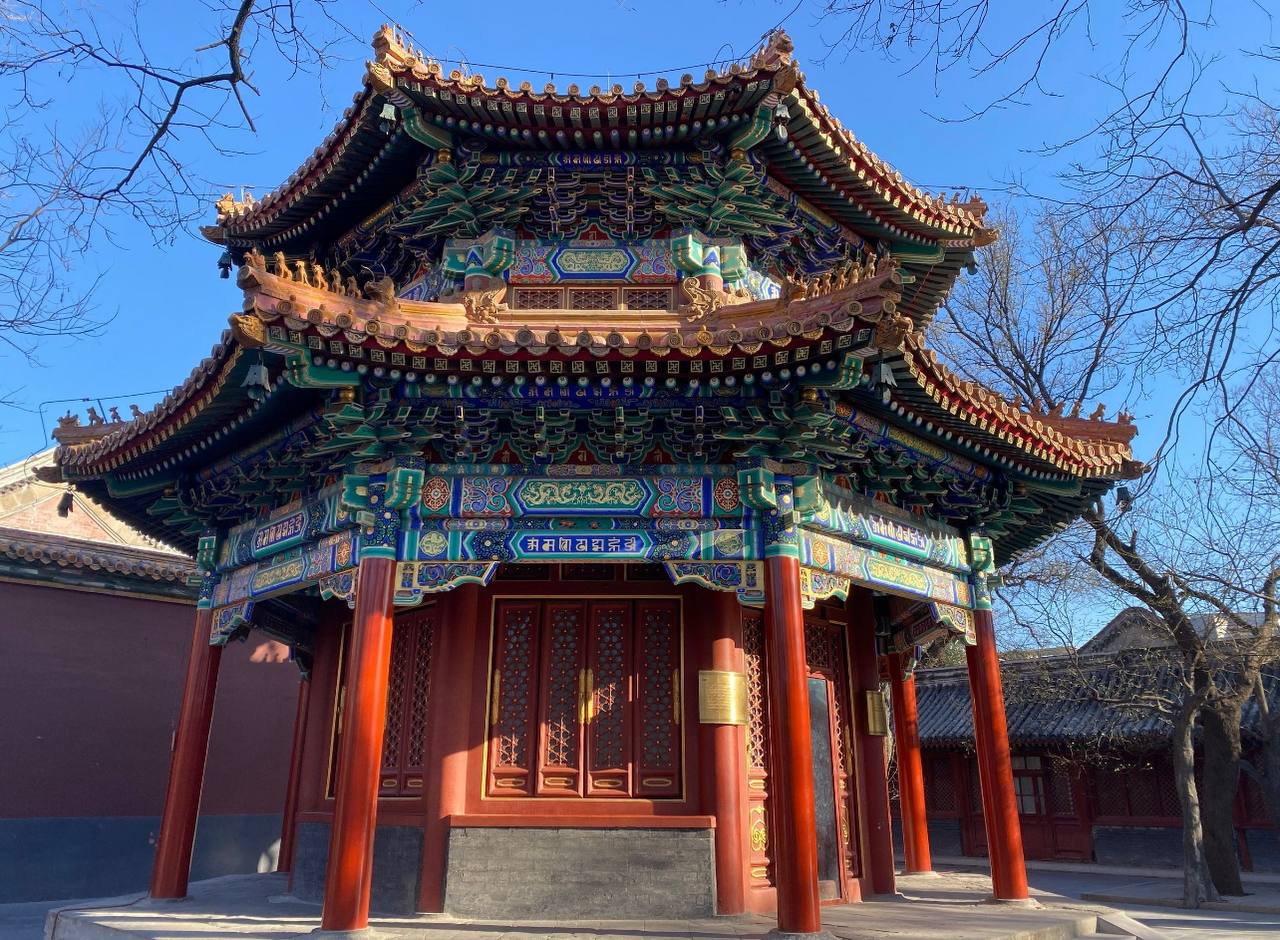
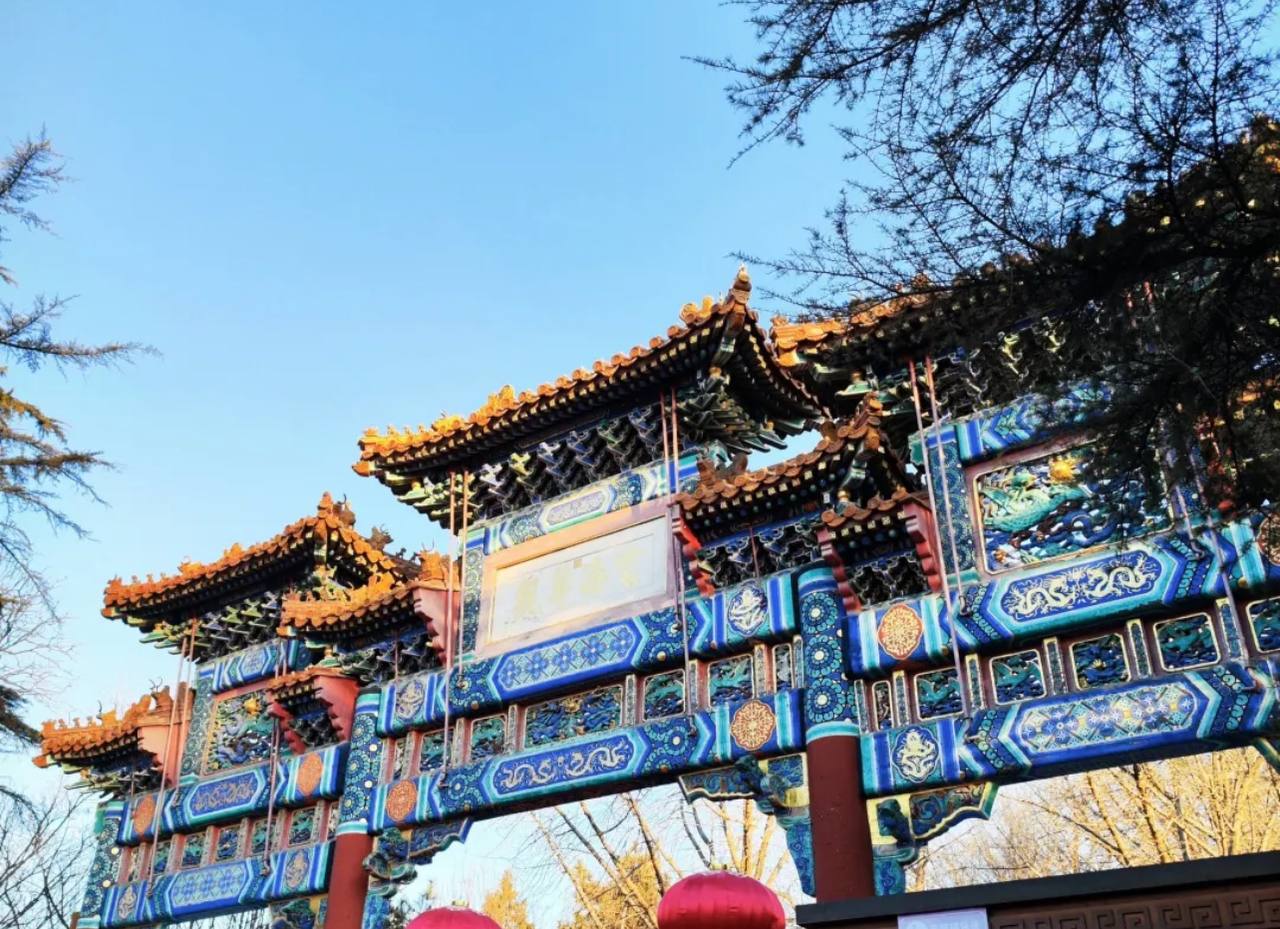
The architecture of the Lama Temple is a combination of Han Chinese and Tibetan styles. The building is adorned with colorful decorations, intricate carvings, and Buddhist symbols.
Traditional Chinese curved roofs and red pillars blend harmoniously with Tibetan elements, such as prayer wheels and thangka paintings.
How to visit the Lama Temple
Location and getting there
Address: 12 Yonghegong Street, Dongcheng District, Beijing
- By Subway:
The most convenient way to reach the temple is by taking Line 2 or Line 5 of the Beijing Subway and getting off at Yonghegong Lama Temple Station. Exit from Exit C and the temple is just a short walk away.
- By Bus: Several buses, such as Bus 13, 116, 117, or 684, stop near the temple.
Admission and opening hours
Admission Fee: ¥25 (subject to change)
Opening Hours: The temple is typically open from 9:00 AM to 4:30 PM (last entry at 4:00 PM), but check local listings for any updates or seasonal changes.
Best Time to Visit
Early Morning: Visiting in the morning offers a peaceful experience before the larger tourist crowds arrive. You may also have the opportunity to witness local worshippers making offerings or participating in ceremonies.
Avoid Public Holidays: Major Chinese holidays such as Spring Festival and National Day can bring large crowds to the temple.
What to Expect During Your Visit
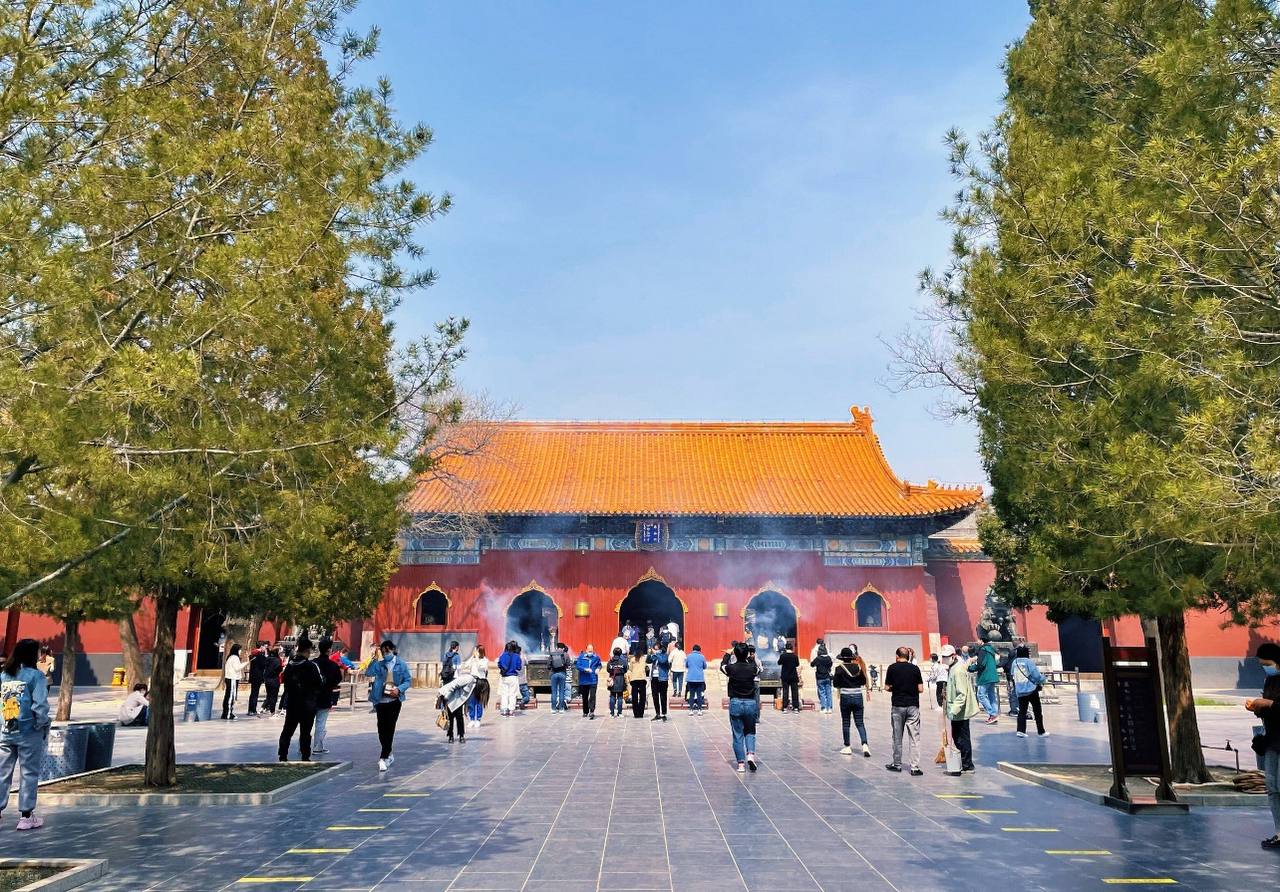
Respect religious practices: Many people visit the Lama Temple to pray and light incense. It’s important to be respectful of the religious activities and avoid disturbing worshippers. Incense sticks are available at the entrance for those who wish to participate in traditional offerings.
Dress modestly: As it is a place of worship, it is respectful to dress modestly when visiting.
Photography restrictions: While you are allowed to take photographs of the temple’s exterior, photography inside the halls is usually prohibited.

Nearby attractions
Confucius temple and imperial college: Just a 10-minute walk from the Lama Temple, this historic site is dedicated to Confucius and was once an important academic institution for imperial scholars.
Wudaoying hutong: A charming and trendy hutong (alleyway) near the temple, filled with boutique shops, cafés, and traditional Beijing architecture, offering a perfect mix of history and modern culture.