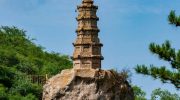
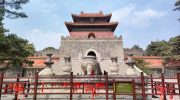
Mount Cangyan (苍岩山) is a stunning mountain located in Jingxing County, southwestern Hebei Province, about 50 kilometers from Shijiazhuang, the provincial capital.
Known for its dramatic landscapes and cliffside temples, this site is a perfect combination of natural beauty and ancient architecture. It’s one of Hebei’s most photogenic and spiritually significant destinations.

What Is Mount Cangyan?
Mount Cangyan belongs to the eastern section of the Taihang Mountain range and rises to about 1,000 meters above sea level. The area is covered with dense forests, steep stone cliffs, gorges, waterfalls, and ancient temples nestled in the mountainside.
The mountain is especially famous for its suspended temple architecture and its peaceful atmosphere, making it a popular destination for hikers, photographers, and cultural travelers.

Fortune Celebration Temple (福庆寺)
The highlight of Mount Cangyan is the Fortune Celebration Temple, an ancient Buddhist temple complex built into the mountain cliffs.
- The temple was originally founded during the Sui Dynasty (581–618) and is associated with Princess Nan Yang, a daughter of Emperor Yang of Sui, who is said to have practiced Buddhism here.
- Its most iconic structure is the Bridge-Tower Hall, built on a stone arch that spans a deep gorge. This hall appears to float between cliffs and is supported by a stone bridge made from 365 carefully carved blocks.
- To reach the temple, visitors climb a stone staircase of over 360 steps carved into the mountainside.

This unique architectural design has earned Mount Cangyan the nickname of one of China’s “Three Great Hanging Temples.”
Famous Film Location
Mount Cangyan gained international fame as a filming location for “Crouching Tiger, Hidden Dragon.” The scene where the characters leap among trees and over misty cliffs was filmed here, highlighting the surreal beauty of the Bridge-Tower Hall and its surrounding landscape.

What to do at Mount Cangyan
- Hike the mountain trails: Enjoy panoramic views, explore forested paths, and visit hidden shrines and pavilions.
- Climb to the temples: Discover ancient halls, statues, and Buddhist carvings, all harmoniously integrated into the rock.
- Photography: Capture foggy forests, stone bridges, and the dramatic cliffside architecture. Autumn and spring are especially beautiful.
- Ride the cable car: For those who prefer not to climb, a scenic cable car offers a quicker way up.

Best time to visit
Spring (April–June): Lush greenery, blooming flowers, and comfortable weather.
Autumn (September–October): Crisp air and colorful foliage—arguably the best time for photography.
Winter: Quiet and mystical under a layer of snow, but some paths may be slippery or closed.
Summer: Cooler than city areas, but be prepared for humidity and possible rain.

Visitor Information
- Opening hours: Usually 8:00 AM to 5:00 PM.
- Admission fee: Around 65 RMB; additional fee for the cable car (optional).
- Time to visit: 3 to 4 hours minimum if you hike and explore the temples; longer if you go slowly or take photos.

How to get to Mount Cangyan
From Shijiazhuang, take a direct bus to Jingxing County, then a local minibus or taxi to the mountain entrance.
By car, the trip from Shijiazhuang takes about 1.5 to 2 hours.
The area is well signposted, and parking is available near the tourist entrance.

Travel tips
- Wear hiking shoes with good grip.
- Bring water, snacks, and sun protection.
- Avoid visiting on national holidays when the area can be crowded.
- Best to arrive early in the morning for peaceful views and soft light.
- There are small eateries and tea houses near the base of the mountain, but limited food options on the trails.
Why you must visit Mount Cangyan?
Mount Cangyan is not just a natural attraction—it is a place of ancient culture, peaceful spirituality, and dramatic scenery. The mountain’s harmony between architecture and nature, especially the bridge-hall temple suspended between cliffs, leaves a lasting impression.
It’s ideal for a day trip from Shijiazhuang or a cultural stop during a journey through Hebei Province.