Temples in China are significant cultural and religious landmarks, embodying the diverse spiritual traditions of the country, including Buddhism, Taoism, and Confucianism. These temples are not only places of worship but also reflect the rich history, philosophy, and architectural styles of ancient and modern China.
China has three major religion and all of them are very important. In china you may find temples of these religions and sometimes they are located at the same place.
Read more:
Waterfalls in China which are worth visiting
10 top-rated places in Shanghai
3 major religion in China
Buddhism
Buddhism was introduced to China from India during the Han Dynasty (206 BCE – 220 CE). Since then, it has become one of the major religions in China, with many temples being built to honor Buddhist deities, house sacred relics, and serve as places of meditation.
Confucianism
Confucianism, a system of ethics and moral teachings founded by Confucius (551–479 BCE), has deeply influenced Chinese culture. Though not a religion with gods and deities, Confucian temples were built to honor Confucius and his teachings, focusing on virtues like filial piety, education, and respect for tradition.
Taoism
Taoism, a spiritual and philosophical tradition founded by Laozi in the 6th century BCE, is a native religion of China. Taoist temples are centers for the worship of the Tao (the “Way”), along with immortals, deities, and ancestors.
Top greatest temples in China
Shaolin Temple
Built: 495 AD during the Northern Wei Dynasty.
Religion: Buddhism (Chan/Zen Buddhism).

Known as the birthplace of Shaolin Kung Fu and a key center for Chan (Zen) Buddhism. It’s one of the most famous temples worldwide, with a rich martial arts tradition.
Features: The temple complex includes pagodas, meditation halls, and training grounds for monks practicing martial arts.
Name: 少林寺
Location: Dengfeng, Henan
Jokhang Temple
Built: 7th century during the reign of King Songtsen Gampo.
Religion: Tibetan Buddhism.

The most sacred and important temple in Tibet, housing the revered Jowo Shakyamuni statue of Buddha. It’s a pilgrimage destination for Tibetan Buddhists.
Features: Tibetan-style architecture with golden roofs, vibrant murals, and the inner sanctum holding the Jowo Rinpoche statue.
Name: 大昭寺
Location: Lhasa, Tibet
Temple of Heaven
Built: 1406-1420 AD during the Ming Dynasty.
Religion: Taoism (used for imperial worship of Heaven).

This UNESCO World Heritage Site was used by emperors to pray for good harvests and is an important symbol of Chinese spirituality and cosmology.
Features: Famous for its round Hall of Prayer for Good Harvests, surrounded by a large park, reflecting ancient Chinese philosophy and cosmology.
Name: 天坛
Location: Beijing
Read more: Temple of Heaven visit guide
Lama Temple
Built: 1694 AD during the Qing Dynasty.
Religion: Tibetan Buddhism.

One of the largest and most important Tibetan Buddhist monasteries in China, featuring intricate architectural details and a rich collection of Buddhist statues and relics.
Features: The temple houses a massive statue of the Maitreya Buddha carved from a single piece of sandalwood, standing 26 meters tall.
Name: Yonghe Temple, 雍和宫
Location: Beijing
Read more: Lama Temple visit guide
Longmen Grottoes
Built: 5th century during the Northern Wei Dynasty.
Religion: Buddhism.

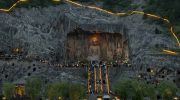
Although technically a series of caves rather than a single temple, the Longmen Grottoes contain thousands of Buddhist statues and inscriptions, making it one of the most significant examples of Chinese Buddhist art.
Features: Over 100,000 Buddha statues and 2,800 inscriptions, with the most famous being the 17-meter-tall Vairocana Buddha.
Name: 龙门石窟
Location: Luoyang, Henan
Lingyin Temple
Built: 328 AD during the Eastern Jin Dynasty.
Religion: Buddhism.

One of the wealthiest and most famous Buddhist temples in China, it is located amidst the picturesque mountains and forests near Hangzhou’s West Lake.
Features: The Grand Hall of the Great Sage houses a 24.8-meter-high statue of Sakyamuni, while the surrounding Feilai Feng grottos feature many ancient stone carvings.
Name: 灵隐寺
Location: Hangzhou, Zhejiang
White Horse Temple
Built: 68 AD during the Eastern Han Dynasty.
Religion: Buddhism.

Known as the first Buddhist temple in China, it was established when Buddhism was introduced to the country, making it a vital historical site for Chinese Buddhism.
Features: A blend of traditional Chinese temple architecture and Indian and Thai styles, with various halls and Buddhist statues.
Name: 白马寺
Location: Luoyang, Henan
Nanshan Temple
Built: 1998.
Religion: Buddhism.

Located near the tropical shores of Hainan, Nanshan Temple is part of the larger Nanshan Cultural Tourism Zone. It is known for its 108-meter-high statue of Guan Yin, the Bodhisattva of Compassion.
Features: The statue, which has three faces, overlooks the South China Sea, symbolizing compassion, wisdom, and peace.
Name: 南山寺
Location: Sanya, Hainan
Famen Temple
Built: 2nd century AD during the Eastern Han Dynasty.
Religion: Buddhism.

Known for housing a sacred relic of the Buddha’s finger bone, Famen Temple is considered one of the holiest Buddhist sites in China.
Features: The temple includes a modern pagoda and underground palace, built to protect the Buddha relic.
Name: 法门寺
Location: Baoji, Shaanxi
Hanging Monastery
Built: 491 AD during the Northern Wei Dynasty.
Religion: Mix of Buddhism, Taoism, and Confucianism.

Famous for being built into the cliffs of Mount Heng, this temple integrates three major Chinese philosophies (Buddhism, Taoism, and Confucianism) and stands as a marvel of ancient engineering.
Features: The temple clings precariously to a cliff face over 75 meters above the ground, consisting of pavilions and corridors connected by bridges and paths.
Name: 悬空寺
Location: Datong, Shanxi
Wutai Shan

Religion: Buddhism.
One of China’s Four Sacred Buddhist Mountains and a UNESCO World Heritage Site, home to numerous temples and monasteries. It’s a pilgrimage site for Buddhists, particularly devoted to the Bodhisattva Manjusri.
Features: Over 50 temples, including the Nanchan Temple and the Tayuan Temple, famous for its large white stupa.
Name: 五台山
Location: Shanxi