Zhongyang Street (also known as Central Avenue or Zhongyang Dajie) is one of Harbin’s most famous and vibrant streets. This historic pedestrian street is a blend of European architecture, modern shopping, and local culture, reflecting Harbin’s unique position as a cultural crossroads between China and Russia.
It’s a must-visit for anyone traveling to Harbin, especially for its rich historical significance and lively atmosphere.
Read more:
History of Zhongyang Street

Zhongyang Street was originally built in 1898, during the construction of the China Eastern Railway, which connected Harbin with Russia. As Russian immigrants and merchants began to settle in Harbin, the street developed into a bustling commercial center.

- The street became the main avenue of Daoli District, attracting various international businesses and residents, including Russians, Germans, Jews, French, and Japanese. This mix of influences is reflected in the architecture and cultural diversity of the area.
Over time, Zhongyang Street became a symbol of Harbin’s cosmopolitan past, with many European-style buildings constructed along its length.
Architecture

Zhongyang Street is known for its eclectic architectural styles, which include Renaissance, Baroque, Art Nouveau, and Russian Orthodox influences.
The buildings are well-preserved and house various establishments, from modern boutiques to historic restaurants. As you walk along the street, you’ll see charming European-style facades, colorful decorations, and some old buildings dating back over a century.
Russian architecture is especially prominent, reflecting Harbin’s past as a hub for Russian immigrants during the early 20th century.
Zhongyang Street as a Pedestrian Street

In 1997, Zhongyang Street was converted into a pedestrian-only zone, making it a popular destination for both locals and tourists.
Stretching about 1.4 kilometers (0.87 miles), the street runs from the Songhua River in the north to Jingwei Street in the south.

The absence of cars allows visitors to leisurely stroll, shop, dine, and explore without the hustle of traffic, making it a perfect spot for sightseeing and taking photos.
Shopping and dining

Zhongyang Street is a shopping paradise, with a wide variety of shops selling everything from local handicrafts to international brands.
- It’s also known for its Russian goods stores, where visitors can purchase Russian chocolates, matryoshka dolls, vodka, and Russian-style clothing.
The street is lined with cafés, restaurants, and ice cream parlors, many of which serve traditional Russian and European cuisine, reflecting the area’s Russian heritage. Popular dishes include Russian borscht, Harbin-style smoked sausage, and Kiev cutlet.
One of the most famous treats to try here is Madieer ice cream, a local delicacy that has been made and sold on Zhongyang Street for decades, even during the cold winters.
Landmarks on Zhongyang Street

Several notable landmarks and buildings are located on or near Zhongyang Street, adding to its historical and cultural significance:
- Modern Hotel (Ma Dieer Hotel)
Built in 1906, this elegant hotel is one of Harbin’s oldest and best-preserved hotels. It has hosted numerous famous figures, including celebrities, diplomats, and foreign officials.
- Songhua River Flood Control Monument
Located at the northern end of Zhongyang Street, near the riverbank, this monument was built to commemorate the city’s efforts to control the devastating floods of the Songhua River. It’s a popular gathering place for locals and offers beautiful views of the river.

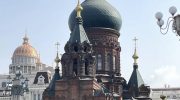
A short walk from Zhongyang Street, this famous Russian Orthodox church is one of Harbin’s most iconic landmarks, showcasing Russian architectural influence.
- European Architecture Museum
Many of the historical buildings on Zhongyang Street are considered part of Harbin’s “European Architecture Museum” due to their significance and preservation.
Cultural and artistic events

Throughout the year, Zhongyang Street hosts various cultural activities, festivals, and performances. During the Harbin Ice and Snow Festival (December to February), the street is decorated with colorful lights and ice sculptures, adding a festive winter charm.
Street performers often entertain crowds with live music, traditional Chinese performances, and other artistic displays, contributing to the vibrant and lively atmosphere.
Winter experience

Winter is a particularly magical time to visit Zhongyang Street, especially during the Harbin Ice and Snow Festival. The street is adorned with ice sculptures and bright, twinkling lights, while the snow-covered ground enhances the European feel of the area.
The Songhua River, located at the northern end of the street, often freezes over in winter, and visitors can enjoy activities like ice skating or simply admiring the wintery landscape.

Best time to visit
Summer (June to August): Zhongyang Street is lively in the summer, with comfortable weather for walking and enjoying outdoor dining. The Songhua River nearby becomes a hotspot for boat rides and riverbank activities.
Winter (December to February): Visiting during winter is particularly special as the street comes alive with festive decorations and events during the Harbin Ice and Snow Festival. The cold can be intense, so make sure to bundle up!

Tips for visitors
Prepare for crowds: Zhongyang Street can get quite busy, especially during the festival season or on weekends. It’s a popular spot for both tourists and locals.
Try local cuisine: Don’t miss the chance to try some of Harbin’s local foods, particularly the Russian-inspired dishes and Madieer ice cream, even if it’s freezing cold!
Explore nearby attractions: Take time to visit nearby landmarks like Saint Sophia Cathedral and the Songhua River to fully experience Harbin’s unique cultural heritage.
Also visit: